The Open 2026 — betting tips preview
The Open 2026 Betting Tips Preview — Royal Birkdale
The 154th Open Championship returns to Royal Birkdale from 16–19 July 2026 — the eleventh time the Southport links has hosted golf’s oldest major. Below: a course breakdown, the player profile the AI weights most heavily for Birkdale, and how GolfForecast’s data-driven Open picks are constructed.
Looking for this week’s ranked picks? They land in subscriber inboxes by Tuesday 14th July. See the Open 2026 landing page or start a £1 trial to unlock the full list.
Royal Birkdale: 7,100+ yards of links tradition
Royal Birkdale is one of The Open’s mostvisited venues, and the roster of past champions tells you exactly what kind of golfer the course tends to reward. Since the war, Birkdale has crowned Pádraig Harrington (2008), Mark O’Meara (1998), Ian Baker-Finch (1991), Greg Norman (1993) and most recently Jordan Spieth (2017). The common thread: elite ball-striking and a temperament built for wind.
At ~7,156 yards off the championship tees, Birkdale is not long by modern major standards. What makes it championship-defining is the rest: narrow,-running fairways lined by duneland rough, pot bunkers that punish even slightly loose driving, and exposed greens that kick the ball sideways when the wind gets up off the Irish Sea. It is, in other words, a course that exposes inaccurate drivers and rewards those who can shape the ball both ways.
The player profile our AI weights most at Birkdale
Across 8 years of tournament data, three statistical fingerprints separate Open contenders from the rest of the field — and at Royal Birkdale specifically those fingerprints matter more than at any other major venue on the rotation.
- Strokes-gained off-the-tee (accuracy over length). Birkdale’s narrow fairways and duneland rough mean bombing driver is rarely the optimal play. The model up-weights driving accuracy and strokes-gained tee-to-green over raw distance — the same bias that surfaced Padraig Harrington at 40/1 in 2008.
- Open / links history. The same names re-appear at The Open year after year for a reason — links golf is a learned skill. The model under-weights players with poor historical Open finishes even when their PGA Tour form is strong, and flags those with multiple top-20 Open finishes irrespective of recent results.
- Wind-adjusted strokes gained. Most public strokes-gained numbers are weather-neutralised. Our model layers in a wind-adjustment on top so players who have consistently outperformed their baseline on windy days are flagged higher during Open week. Mispriced wind performers are the single most consistent source of value the model spots at The Open.
None of these are rocket science — sharp bettors have known Birkdale favours ball-strikers for decades. What the model adds is a consistent way to quantify those biases against the bookmaker’s prices, and identify exactly where the market has under-priced the players who fit the profile.
How the 2026 Open picks are built
The Open Championship is the model’s strongest tournament of the year — measured by both winner strike rate and return-on-investment since 2018. Here is the exact process subscribers get in their inbox the Tuesday before play starts:
- Field load. Every exempt and qualifier golfer in the 156-player field is loaded with their season-long strokes-gained numbers, recent form, full Open Championship history, and Birkdale-specific appearances.
- Course-fit weighting. Each player is scored against the Birkdale profile above (tee accuracy, Open record, wind-adjusted SG).
- Probability estimation. The model produces a win-equity percentage for every player in the field.
- Odds comparison. Odds are pulled from the bookies covering The Open — including each-way terms (number of places, place fraction) — and compared to the model’s probability.
- Value identification. Discrepancies between model probability and bookmaker price are flagged as value, then handed to subscribers ranked by expected edge.
- Recommended stakes. Each pick is paired with a stake size based on the Kelly criterion, capped sensibly so subscribers aren’t risking the bank on a single week.
Picks are emailed Tuesday before play starts so subscribers have time to shop around for the best price — see our which bookie is best for golf article for a breakdown of whose outright markets are consistently sharpest for The Open.
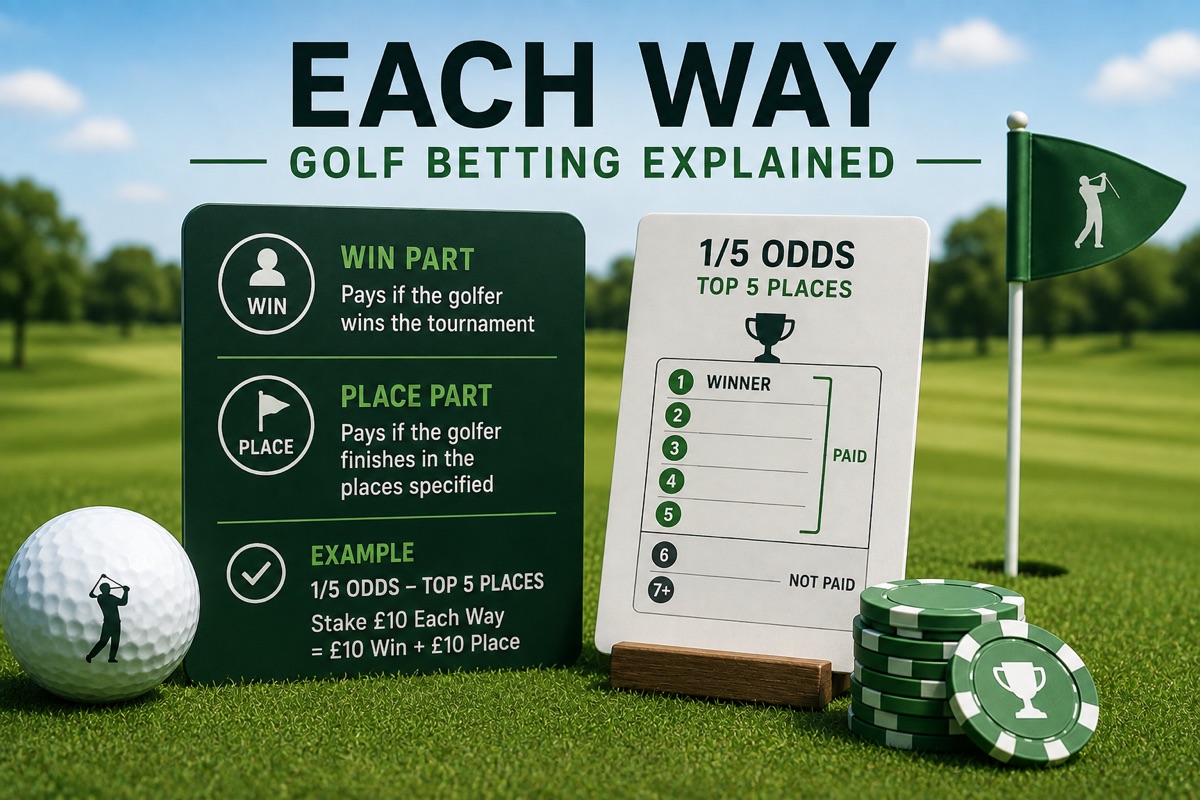
Each-way or straight win at The Open?
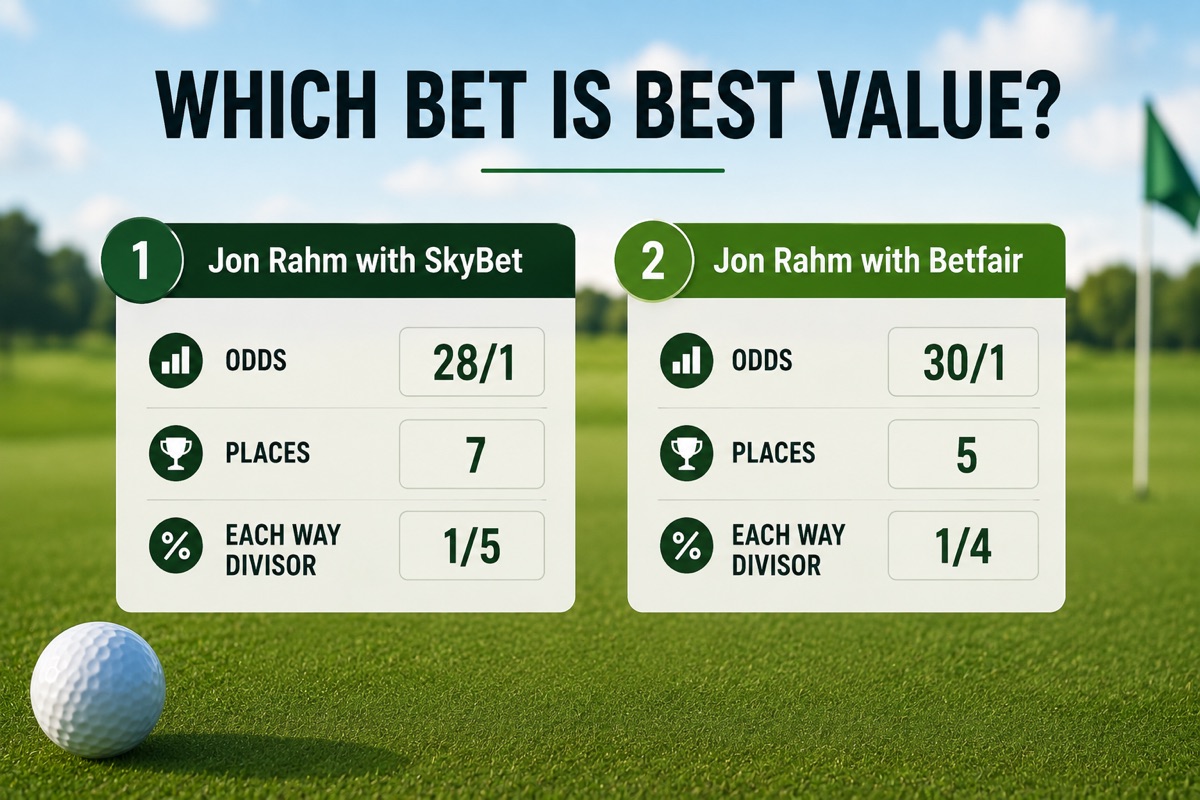
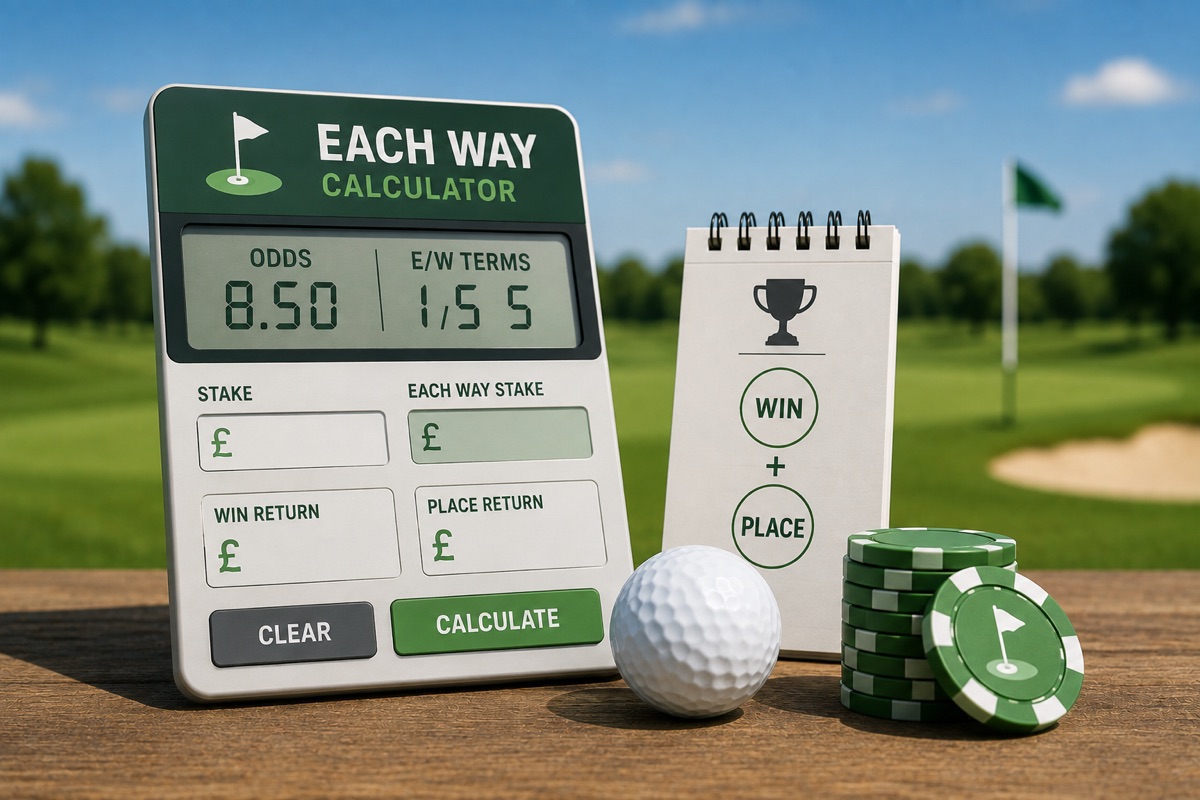
The Open is one of the rare weeks where each-way betting is genuinely more profitable than backing winners outright, for one simple reason: bookmakers compete hard for Open business and routinely offer 8, 9 or even 10 each-way places at 1/5 odds for the first round of the field that’s realistically in contention.
When terms are that generous the implied each-way probability of a mid-priced 33/1 player exceeds the outright win probability implied by the same price. The model is calculating this exact differential — across every bookmaker, for every player, every week — which is one reason the Open has historically been the model’s highest-ROI event. We cover the underlying maths in our each-way value comparison article.
What you get this week
Subscribers to GolfForecast receive, by email on Tuesday 14th July:
- The model’s full ranked shortlist for the 154th Open Championship
- Top-5 each-way value picks, identified by odds discrepancy across major UK bookmakers
- Optimal stake per pick based on a £10/point bankroll
- Full historical track record — every tournament since 2018 tracked and published
Start a £1 trial — full access for 30 days, cancel anytime. £29.99/month thereafter. Picks for the rest of the PGA Tour and DP World Tour season are included as long as the subscription is active.